The circular childrenswear playbook: clothes built to be handed on

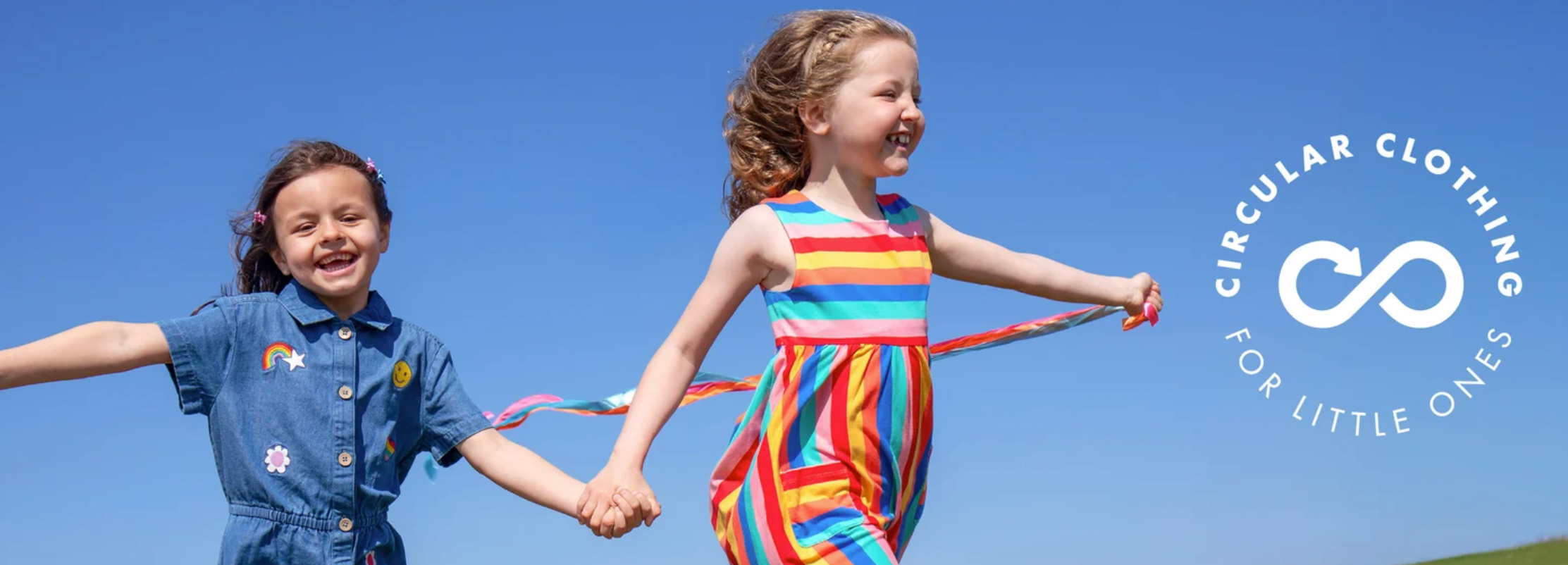
There is a category where being conscious, and by that I mean choosing sustainable materials, following ethical practices and designing for circularity, is completely aligned with how the category naturally works, and it is children's clothing. A small child can go through seven or more sizes before they are three, so every garment has a short first life and, potentially, a long second and third one. That is what makes childrenswear the most natural fit for the circular economy of anything we sell to families. This year the British organic brand Frugi was recognised for leaning into exactly that, winning a Drapers Conscious Fashion Award for its circular work, its second circularity award in two years. Frugi developed its certified circular collection working with the Circular Textiles Foundation, a brilliant organisation in this space, building clothes designed to keep moving rather than end up in a drawer or a bin.
Think of what follows as a playbook for circularity, because there is more than one way to keep a garment in use, and you do not have to do all of them. The first move is to design with circularity in mind from the very start, and this is where Frugi is strong: grow-with-me details like extendable sleeves and adjustable straps so a piece fits for longer, durable construction so it survives being handed down, and a pass-me-on label that quietly tells the next family the garment still has life in it. The second is to offer a take-back or rental route so clothes come back to be worn again rather than binned. My honest advice to a smaller brand here is not to build that yourself but to partner with a specialist: a platform like thelittleloop, founded by Charlotte Morley, runs 'a second-hand marketplace for high-quality kids' clothing', keeps clothes circulating between families, and becomes an extra revenue stream rather than a cost. The third move is about the cloth itself, and it comes with a reality check worth being honest about.
For a garment to be recycled back into fabric at all, it really needs to be a single-fibre material, because blends like poly-cotton are almost impossible to recycle. In practice that means cotton or polyester, the two fibres the current system can actually handle, so the fewer mixed materials and fancy trims you design in, the better its chances. And here is the part the industry is often too loose about: cotton cannot be recycled endlessly. Mechanical recycling shortens the fibres each time, so recycled cotton can usually only go round into new clothing about once before the fibres are too short to spin, after which it is downcycled into genuinely useful things like building insulation, mattress filling and cleaning cloths, but not new garments. That is not a reason to avoid it, it is a reason to be clear-eyed and honest with your customers. And the single most useful thing you can do is also the most overlooked: tell people exactly where to take a garment at the end of its life, because most parents genuinely do not know. Spell out that worn-out clothes should never go in the household recycling bin, and point them to a proper textile bank, a household waste recycling centre with textile facilities, or a brand take-back scheme. Build better, design it to be handed on, and then close the loop by making that last step easy to find.
FREQUENTLY ASKED QUESTIONS
What is circular childrenswear?
Circular childrenswear is children's clothing designed to stay in use for as long as possible, and to be recovered rather than thrown away at the end. Because children outgrow clothes so fast, it is one of the most natural fits for the circular economy. In practice it combines durable, grow-with-me design, take-back or rental so garments move from child to child, and single-fibre materials that stand the best chance of being recycled at the very end of their life.
Can children's clothes really be recycled into new clothes?
Sometimes, but it is more limited than it sounds, and it pays to be honest about it. Only single-fibre fabrics recycle well, in practice cotton or polyester, because blends like poly-cotton are almost impossible to process. Even then, mechanical recycling shortens cotton fibres, so recycled cotton can usually only become new cloth about once before it is downcycled into useful products like building insulation, mattress filling or cleaning cloths rather than fresh garments. Designing in single fibres and durability is what keeps a garment in the clothing loop for as long as possible.
What is the best first step for a small brand that wants to be more circular?
Pick one move and do it properly rather than trying to build the whole system at once. Designing with circularity in mind is the strongest start: grow-with-me cuffs and waistbands, durable construction, single-fibre fabrics and minimal trims. Adding a take-back or rental route is powerful too, and when you are small the smart way is to partner with a specialist platform such as thelittleloop rather than build it yourself, so it becomes an extra revenue stream rather than a burden. Whatever you choose, tell your customers clearly where to take a garment at the end of its life, because most parents simply do not know.
If you are working out how to make your range more circular, or how to tell that story honestly and well, that is exactly the kind of thing we love to help with at The Nest. Just get in touch.
The Nest News lands every Tuesday: three insights shaping maternity, baby and children's products, and the actions you can take. Sign up at thenest.uk.com
Build BETTER. Grow CONSCIOUSLY.


Comments